How to Find the NZ Digital Marketing Course That's Right for You
Choosing the right digital marketing course in New Zealand can feel overwhelming. With so many options promising to teach you everything from social media marketing to email marketing, how do you know which qualification will actually help your small business thrive?
The truth is, not all digital marketing courses are created equal. Some focus heavily on theory, whilst others dive straight into practical application. Some offer flexible online learning that fits around your business schedule, whilst others require rigid attendance. The key is finding a course that aligns with your specific goals, learning style, and the marketing skills you need to grow your Kiwi enterprise.
What Makes a Good Digital Marketing Course in NZ?
Before you start comparing course options, you need to understand what separates a quality digital marketing course from one that won't deliver real value for your time and money.
A solid course should cover the fundamentals of digital channels whilst also keeping pace with the latest digital technologies and marketing tools. You want training that reflects how New Zealanders actually engage with online content, not generic international examples that don't apply to our market.
Look for courses that include hands-on experience with real marketing campaigns. Theory is important, but you need to apply digital marketing principles to see what works. The best programmes let you experiment with course content that mirrors actual business scenarios you'll face.
Understanding Digital Marketing Qualifications in New Zealand
When researching digital marketing courses, you'll encounter several qualification levels. Understanding the difference helps you choose what's right for your current position and career goals.
Certificate in Digital Marketing
A certificate in digital marketing typically provides foundational knowledge across major digital marketing channels. These programmes usually run for a few months and cover core topics like social media strategies, content marketing, and basic analytics.
Certificates work well if you're just starting out or need to quickly upskill in specific areas. They give you enough knowledge to handle your own marketing activities without requiring years of study.
Diploma in Digital Marketing
A diploma in digital marketing offers more comprehensive training than a certificate. These qualifications dive deeper into marketing strategies, often including modules on digital strategy development, advanced social media marketing, and complex marketing campaigns.
Diplomas typically take 6-12 months to complete. They're designed for people who want to become marketing professionals or need in-depth expertise in digital marketing to manage larger marketing operations.
Specialised Provider Courses
New Zealand's specialised providers offer targeted courses that focus on particular aspects of online marketing. These might concentrate solely on AI marketing, social media marketing, SEO, online video, email marketing, online visibility, or specific marketing tools.
Whilst these don't always lead to formal qualifications, they can provide valuable practical skills in areas where you need immediate improvement.
Key Topics You Should Expect to Learn
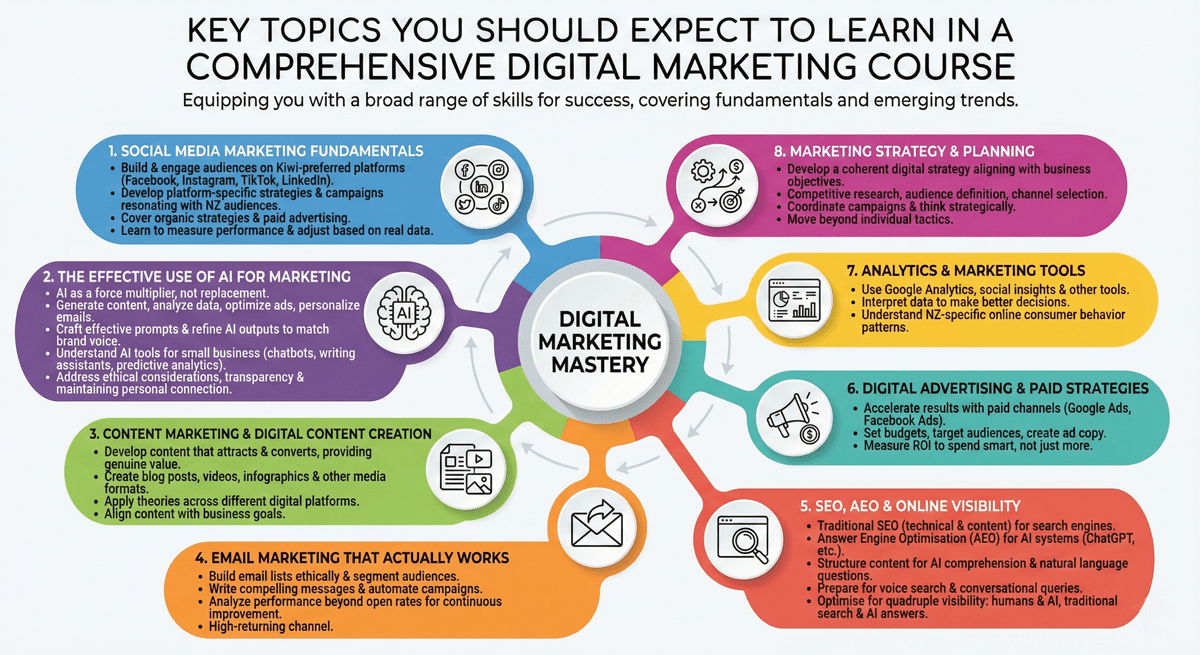
A comprehensive digital marketing course should equip you with a broad range of marketing skills. Here's what quality programmes typically include:
Social Media Marketing Fundamentals
You'll learn how to build and engage audiences on platforms Kiwis actually use. This includes understanding platform-specific strategies for Facebook, Instagram, TikTok, LinkedIn, and emerging channels. Good courses teach you to plan marketing campaigns that resonate with New Zealand audiences, not just copy overseas tactics.
Expect to cover organic social media strategies alongside paid advertising options. You should learn how to measure what's working and adjust your approach based on real data.
The Effective Use of AI for Marketing
AI in marketing has moved from experimental to essential. Quality digital marketing courses now include training on how to use artificial intelligence tools effectively without losing the human touch that makes marketing work.
You'll learn which marketing tasks AI can handle well—like generating content variations, analysing customer data patterns, optimising ad targeting, and personalising email campaigns at scale. More importantly, you'll understand where human creativity and strategic thinking remain irreplaceable.
Good courses teach you to use AI as a force multiplier, not a replacement for genuine understanding. This means learning how to craft effective prompts for AI content tools, how to edit and refine AI-generated outputs to match your brand voice, and how to spot when AI suggestions miss the mark.
You should expect to cover AI-powered marketing tools that are actually accessible to small businesses, not just enterprise-level platforms. This includes chatbots for customer service, AI writing assistants for content creation, predictive analytics for campaign planning, and automated personalisation systems.
The best programmes also address the ethical considerations around AI use—transparency with customers, maintaining authenticity, and avoiding over-reliance on automation that disconnects you from your audience. You'll learn to balance efficiency gains with the personal connection that Kiwi customers value.
Understanding AI in marketing isn't about becoming a technical expert. It's about knowing what's possible, what tools can help your business, and how to implement them strategically. This knowledge keeps you competitive as AI continues reshaping the digital marketing space.
Content Marketing and Digital Content Creation
Creating content that attracts and converts customers is central to any online marketing strategy. Courses should teach you how to develop content that serves your business goals whilst providing genuine value to your audience.
This includes blog writing, video content planning, infographics, and other digital media formats. You'll learn the theories that underpin digital marketing content creation and how to apply them across different digital platforms.
Email Marketing That Actually Works
Despite what you might hear, email marketing remains one of the highest-returning marketing channels. A solid course will teach you how to build email lists ethically, segment audiences, write compelling messages, and automate campaigns.
You should learn how to analyse email campaign performance and continuously improve your results. This means understanding metrics beyond just open rates.
Search Engine Optimisation, Answer Engine Optimisation and Online Visibility
Understanding how people find businesses online is crucial. Quality courses cover both the technical and content sides of SEO, helping you improve your website's visibility without needing to hire expensive specialists.
You'll learn how search engines work, how to research what your customers are searching for, and how to optimise your online presence to show up when it matters.
But traditional SEO is only part of the picture now. The rise of AI search engines and autonomous AI agents is fundamentally changing how people discover information online. Answer Engine Optimisation (AEO) has become just as important as SEO.
When someone asks ChatGPT, Claude, or Perplexity for business recommendations, your content needs to be structured so these AI systems can find, understand, and cite it. This is different from traditional search optimisation. AI agents don't just look for keywords—they seek clear, authoritative answers to specific questions.
Good courses now teach you how to structure content for AI comprehension. This means writing in natural language that directly answers common questions, using clear headings that signal what each section covers, and providing comprehensive information that AI systems recognise as authoritative.
You'll learn to create FAQ sections that AI agents can easily parse, structure data in ways that machines understand, and write content that both humans and AI find valuable. This includes understanding how AI systems evaluate trustworthiness and relevance differently than traditional search algorithms.
The courses should also cover preparing for voice search and conversational queries, since AI agents often respond to natural language questions rather than keyword searches. When someone asks their AI assistant "What's the best digital marketing course in Auckland?", your content needs to be ready to answer.
This quadruple optimisation—for both traditional search engines and AI answer engines, and for humans and AI—is becoming non-negotiable. Businesses that only focus on Google SEO will increasingly miss opportunities as more people turn to AI agents for recommendations and information.
Look for programmes that teach these emerging AEO principles alongside traditional SEO fundamentals. The digital landscape is shifting rapidly, and your training should prepare you for where search is heading, not just where it's been.
Digital Advertising and Paid Strategies
Whilst organic marketing is valuable, knowing how to use paid advertising effectively can accelerate your results. Courses should cover Google Ads, Facebook Ads, and other paid channels relevant to New Zealand businesses.
You'll learn how to set budgets, target the right audiences, create effective ad copy, and measure return on investment. The goal is to spend smart, not just spend more.
Analytics and Marketing Tools
Data drives modern marketing decisions. Expect to learn Google Analytics, social media insights tools, and other platforms that help you understand what's working.
Good courses teach you not just how to collect data, but how to interpret it and make better marketing decisions. This includes understanding online consumer behaviour patterns specific to New Zealand markets.
Marketing Strategy and Planning
The best digital marketing courses don't just teach individual tactics—they help you understand how everything fits together. You should learn to develop a coherent digital strategy that aligns with your business objectives.
This includes competitive research, audience definition, channel selection, content planning, and campaign coordination. You'll learn to think strategically about your marketing efforts rather than jumping from tactic to tactic.
How to Choose Between Online Learning and In-Person Courses
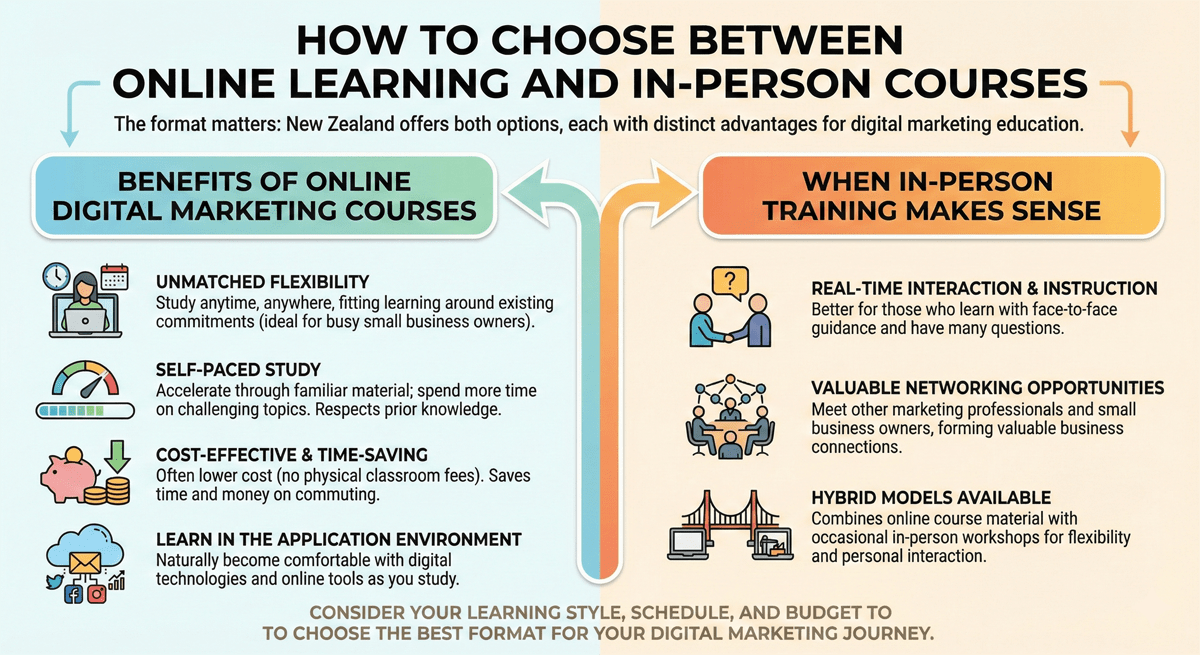
The format you choose matters almost as much as the course content itself. New Zealand offers both options, each with distinct advantages.
Benefits of Online Digital Marketing Courses
Online courses provide flexibility that's hard to beat, especially for small business owners juggling multiple responsibilities. You can study digital marketing anytime and anywhere, fitting learning around your existing commitments.
Many online learning platforms offer self-paced study, meaning you can accelerate through familiar material and spend more time on challenging topics. This approach respects that you already know some things and don't need to sit through lessons on basics you've mastered.
Online formats often cost less than in-person alternatives because providers don't need physical classrooms. You also save time and money on commuting.
The online format works particularly well for digital marketing because you're learning in the same environment where you'll apply your skills. You'll naturally become comfortable with digital technologies and online tools as you study.
When In-Person Training Makes Sense
Some people learn better with face-to-face instruction and real-time interaction with instructors. If you're someone who procrastinates with self-paced learning or has lots of questions, in-person courses might suit you better.
In-person sessions can also provide better networking opportunities. You'll meet other marketing professionals and small business owners, potentially forming valuable connections for your business.
Hybrid models that combine online course material with occasional in-person workshops offer a middle ground. You get flexibility alongside some personal interaction.
Evaluating Course Providers: What to Look For
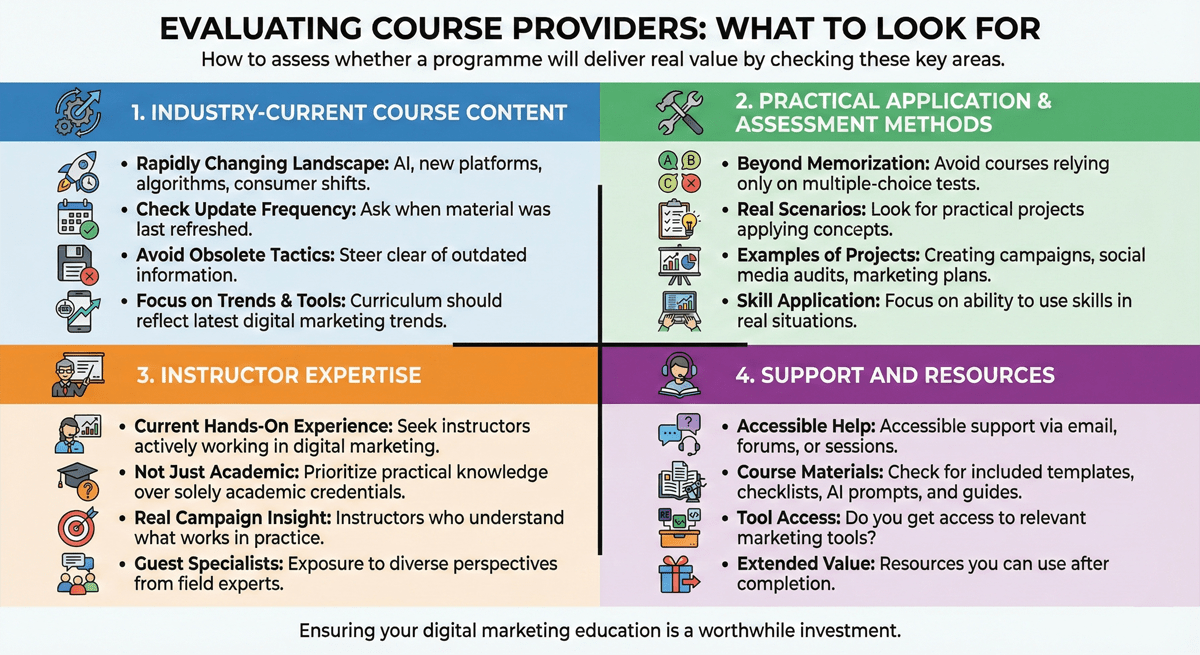
Not all course providers are equal. Here's how to assess whether a programme will deliver real value.
Industry-Current Course Content
Digital marketing changes rapidly. AI in marketing, new platforms, algorithm updates, and shifting consumer behaviours mean courses must stay current. Ask when the course material was last updated.
Quality providers regularly refresh their curriculum to reflect the latest digital marketing trends and tools. If the course still emphasises tactics that were relevant five years ago but have since become obsolete, keep looking.
Practical Application and Assessment Methods
How does the course assess your learning? The best programmes include practical projects where you apply concepts to real scenarios. This might mean creating actual marketing campaigns, conducting social media audits, or developing comprehensive marketing plans.
Avoid courses that rely solely on multiple-choice tests. These measure memorisation, not your ability to apply marketing skills in real situations.
Instructor Expertise
Who's teaching the course? Look for instructors with current, hands-on experience in digital marketing, not just academic credentials. The best teachers have worked on real marketing campaigns and understand both what the textbook says and what actually works in practice.
Some providers bring in guest speakers who are marketing specialists in specific areas. This exposes you to diverse perspectives and real-world insights.
Support and Resources
What happens when you get stuck or have questions? Quality programmes provide accessible support, whether through email, discussion forums, or scheduled help sessions.
Check what course resources you'll receive. Do you get access to marketing tools? Are there AI prompts, templates, checklists, and guides you can use after completing the course? These materials extend the value beyond just the lessons.
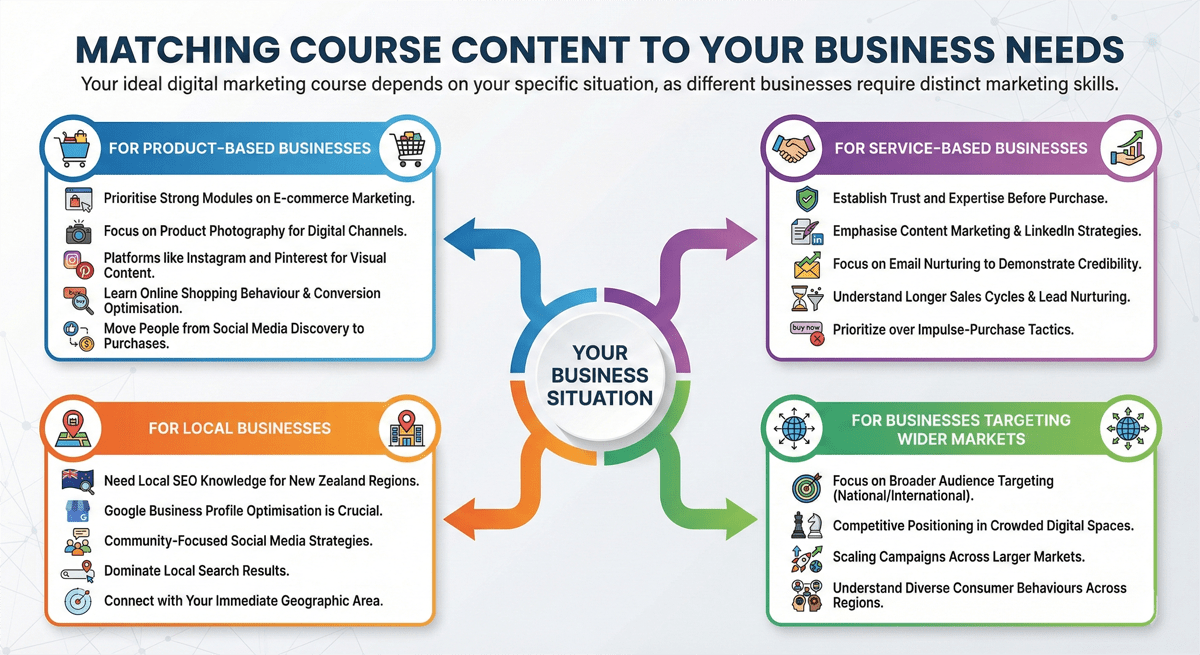
Matching Course Content to Your Business Needs
Your ideal digital marketing course depends on your specific situation. A retail shop owner needs different marketing skills than someone running a B2B consultancy.
For Product-Based Businesses
If you sell physical products, prioritise courses with strong modules on e-commerce marketing, product photography for digital channels, and platforms like Instagram and Pinterest where visual content performs well.
You'll benefit from learning about online shopping behaviour, conversion optimisation, and how to move people from social media discovery to actual purchases.
For Service-Based Businesses
Service businesses need to establish trust and expertise before people buy. Look for courses that emphasise content marketing, LinkedIn strategies, email nurturing, and how to demonstrate credibility through digital content.
Understanding longer sales cycles and lead nurturing becomes more important than impulse-purchase tactics.
For Local Businesses
If you serve a specific New Zealand region, you need local SEO knowledge, Google Business Profile optimisation, and community-focused social media strategies. Your course should address how to dominate local search results and connect with your immediate geographic area.
For Businesses Targeting Wider Markets
If you're selling nationally or internationally, your focus shifts to broader audience targeting, competitive positioning in crowded digital spaces, and scaling campaigns across larger markets.
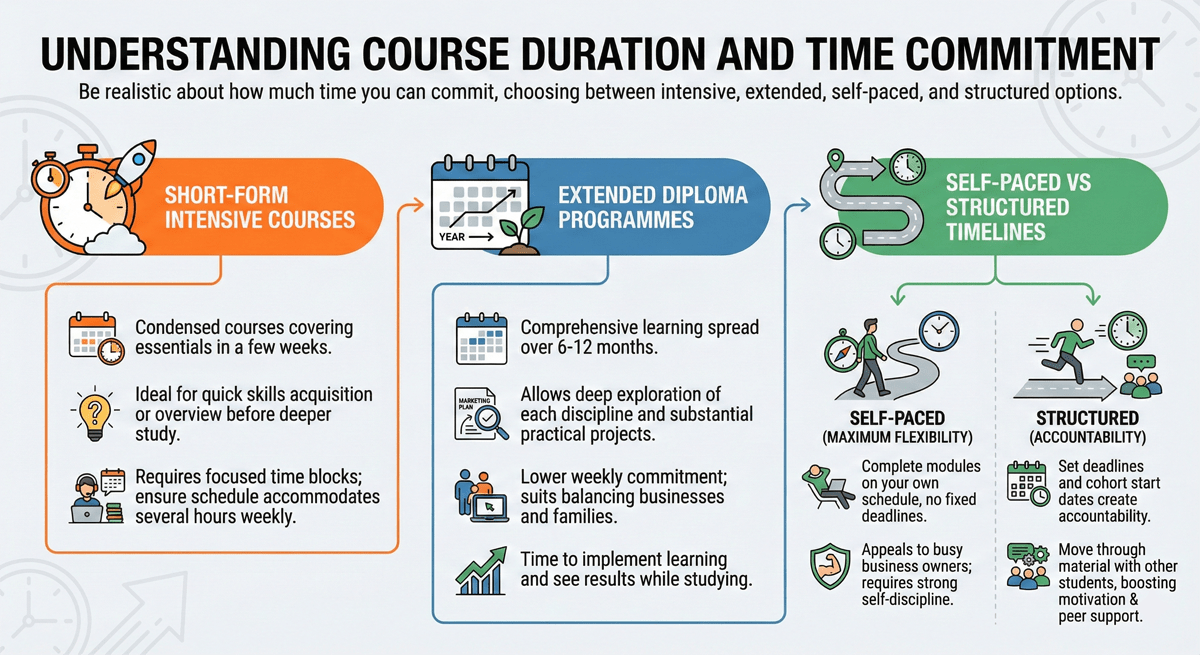
Understanding Course Duration and Time Commitment
Be realistic about how much time you can commit. Courses range from intensive multi-week programmes to year-long qualifications.
Short-Form Intensive Courses
Some providers offer condensed courses that cover essentials in a few weeks. These work if you need specific marketing skills quickly or want an overview before deciding whether to pursue deeper study.
Intensive formats require focused time blocks. Make sure your schedule can accommodate several hours per week during the course period.
Extended Diploma Programmes
Comprehensive diplomas typically spread learning over 6-12 months. This allows time to deeply explore each digital marketing discipline and complete substantial practical projects.
The extended timeline means lower weekly time commitments, which suits people balancing businesses and families. You'll have time to implement what you learn and see results whilst still studying.
Self-Paced vs Structured Timelines
Self-paced online courses let you complete modules on your schedule, without fixed deadlines. This maximum flexibility appeals to busy business owners but requires strong self-discipline.
Structured courses with set deadlines and cohort start dates create accountability. You'll move through material with other students, which can boost motivation and provide peer support.
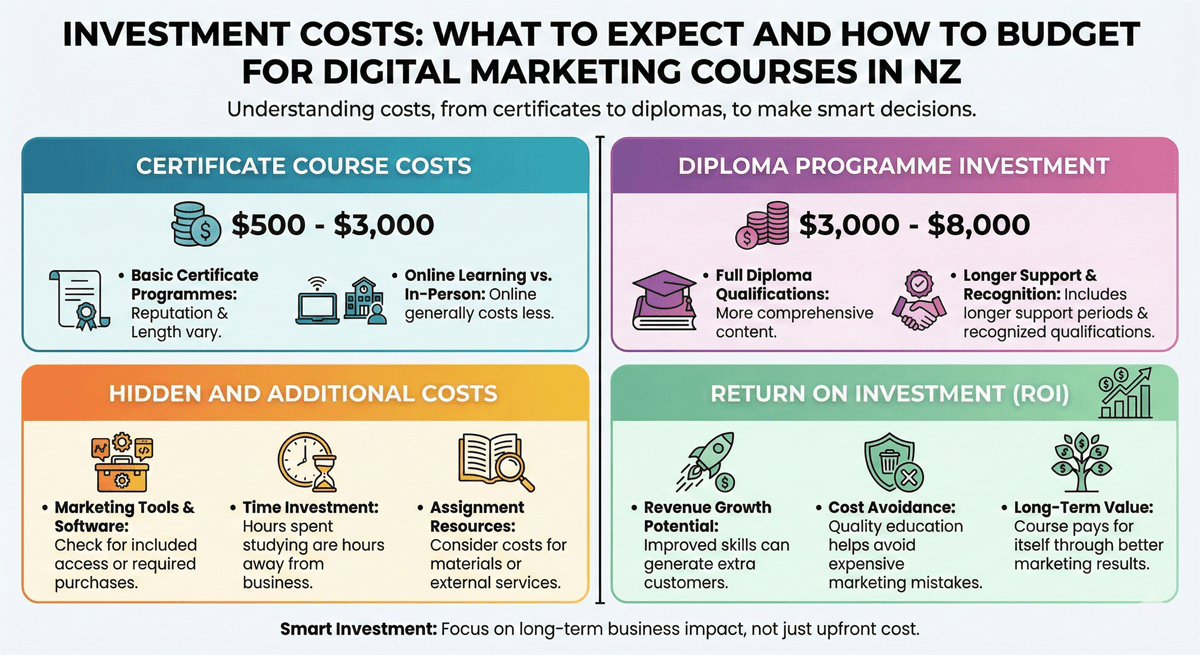
Investment Costs: What to Expect and How to Budget
Digital marketing courses in New Zealand vary widely in price. Understanding what you're paying for helps you make smart investment decisions.
Certificate Course Costs
Basic certificate programmes typically cost between $500-$3,000 depending on provider reputation, course length, and what's included. Online learning courses generally cost less than in-person equivalents.
Diploma Programme Investment
Full diploma qualifications usually range from $3,000-$8,000. The higher investment reflects more comprehensive content, longer support periods, and often more recognised qualifications.
Hidden and Additional Costs
Beyond tuition, consider whether you'll need to purchase marketing tools or software to complete assignments. Some courses include tool access, whilst others expect you to have existing accounts.
Factor in time costs too. The hours you spend studying are hours you're not working in your business. The investment isn't just financial.
Return on Investment
Think about what improved marketing skills could mean for your business revenue. If the course helps you generate even a few extra customers per month, it can pay for itself many times over.
Many small businesses waste thousands on ineffective marketing because they don't understand what works. Quality education can actually save money by helping you avoid expensive mistakes.
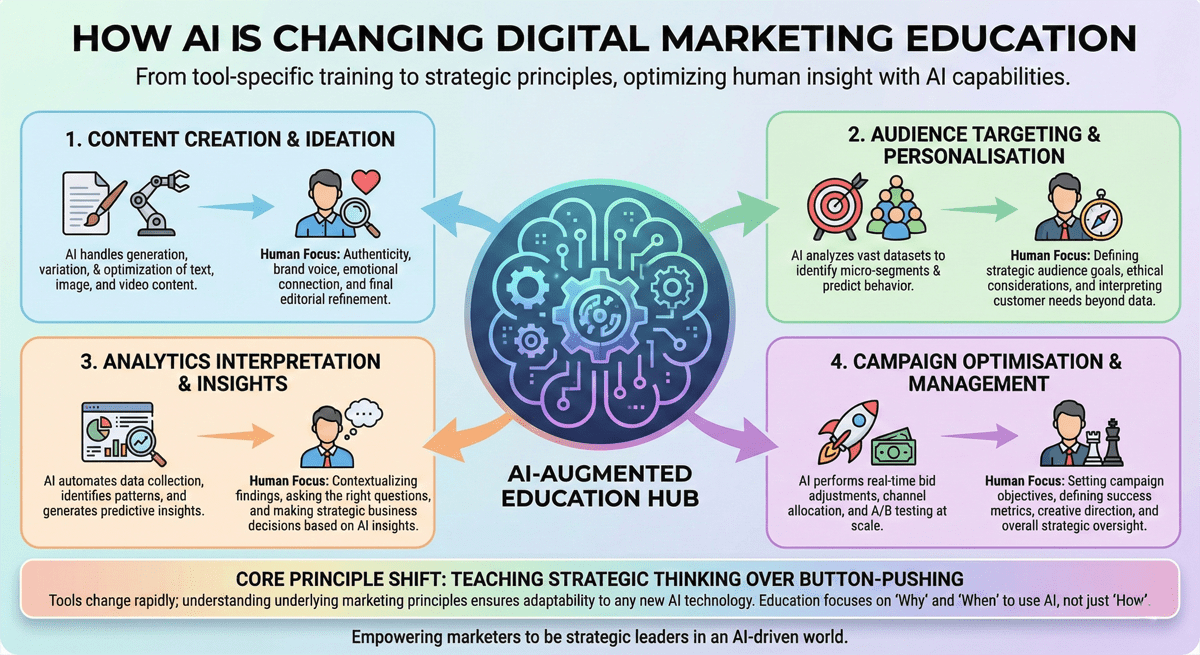
How AI is Changing Digital Marketing Education
Artificial intelligence is reshaping both digital marketing practice and how courses teach it. AI in marketing now touches content creation, audience targeting, analytics interpretation, and campaign optimisation.
Modern courses should address how to use AI marketing tools effectively whilst maintaining authentic connection with customers. You'll want to learn which tasks AI can handle and where human insight remains irrelevant.
Look for programmes that teach the principles underlying marketing approaches rather than just tool-specific button-pushing. Tools change rapidly, but strong strategic thinking adapts to whatever new technologies emerge.
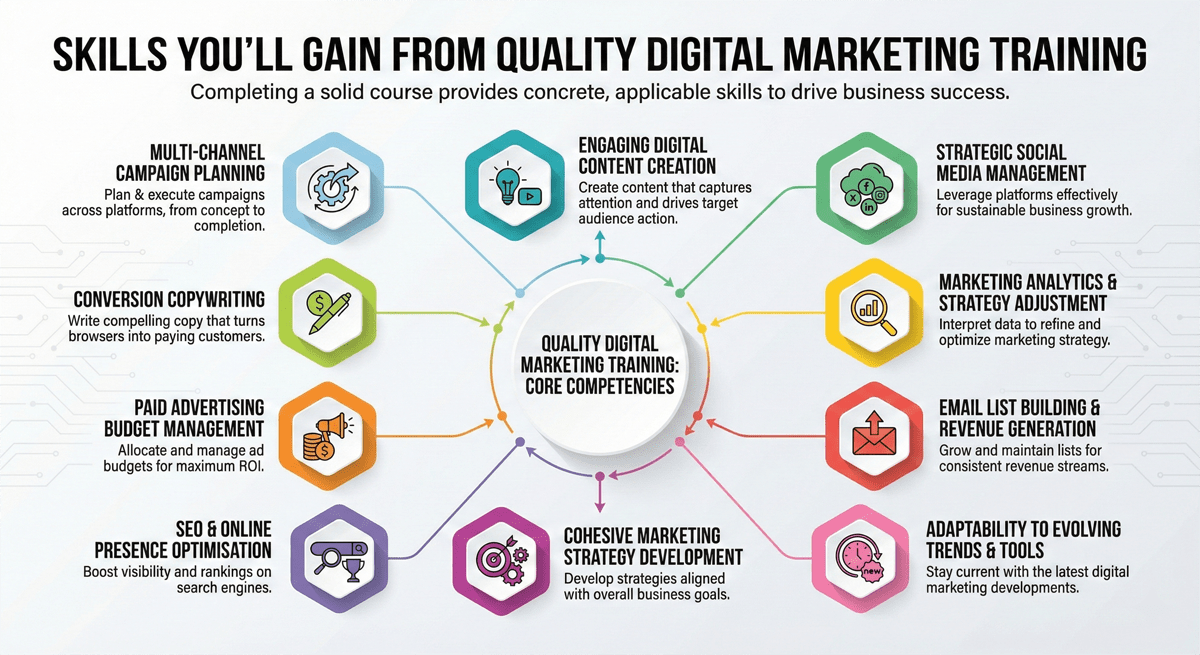
Skills You'll Gain from Quality Digital Marketing Training
Completing a solid digital marketing course should leave you with concrete, applicable skills.
You'll be able to:
- Plan and execute multi-channel marketing campaigns from concept to completion
- Create digital content that engages your target audience and drives action
- Use social media platforms strategically for business growth
- Write marketing copy that converts browsers into customers
- Interpret marketing analytics and adjust strategy based on data
- Manage paid advertising budgets effectively
- Build and maintain email lists that generate consistent revenue
- Optimise your online presence for search engines
- Develop cohesive marketing strategies aligned with business goals
- Stay current with evolving digital marketing trends and tools
These marketing skills should feel immediately applicable to your business. The day after learning a new concept, you should be able to implement it.
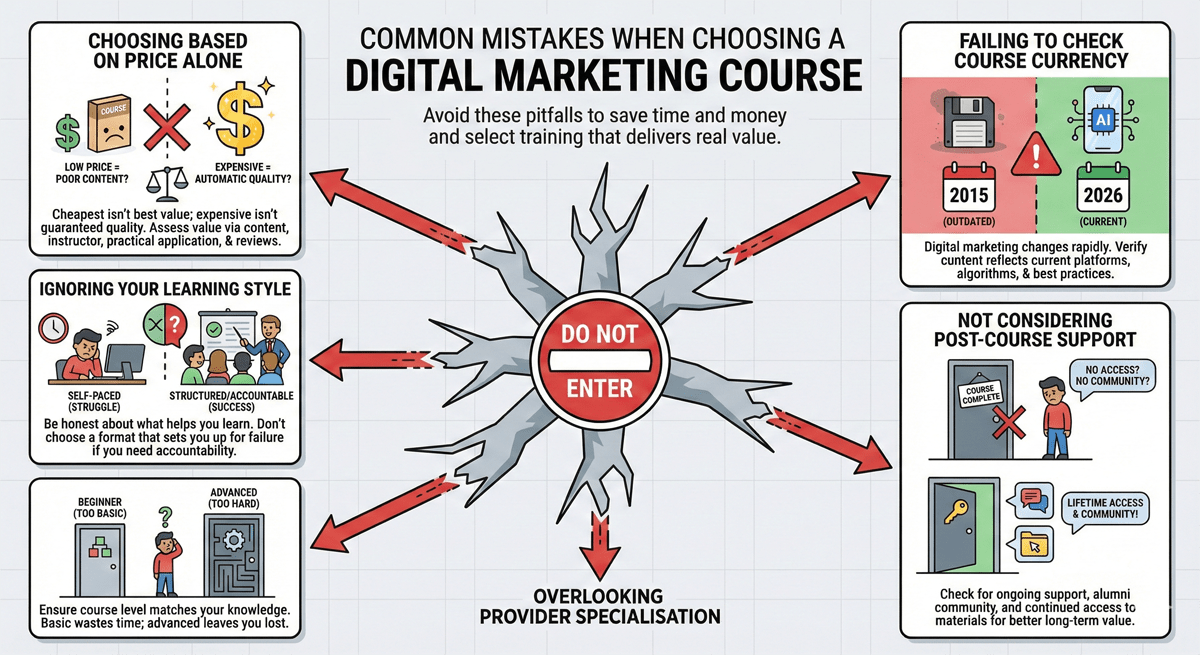
Common Mistakes When Choosing a Digital Marketing Course
Many people make predictable errors when selecting training. Avoiding these pitfalls saves time and money.
Choosing Based on Price Alone
The cheapest course isn't necessarily the best value. Very low prices often indicate minimal content, outdated information, or poor support. Likewise, expensive doesn't automatically mean quality.
Assess value based on content comprehensiveness, instructor expertise, practical application opportunities, and reviews from past students.
Ignoring Your Learning Style
If you know you need accountability and struggle with self-paced learning, don't choose a course format that sets you up for failure. Be honest about what environment helps you learn best.
Overlooking Provider Specialisation
Some providers excel at teaching beginners, whilst others target experienced marketers looking to upskill. Make sure the course level matches your current knowledge. A course that's too basic wastes your time, whilst one that's too advanced leaves you lost.
Failing to Check Course Currency
Digital marketing in 2026 looks different than it did even two years ago. Verify that course content reflects current platforms, algorithms, and best practices. Ask when material was last updated.
Not Considering Post-Course Support
What happens after you complete the final module? Can you still access course materials? Is there any ongoing support or alumni community? Courses that provide continued access offer better long-term value.
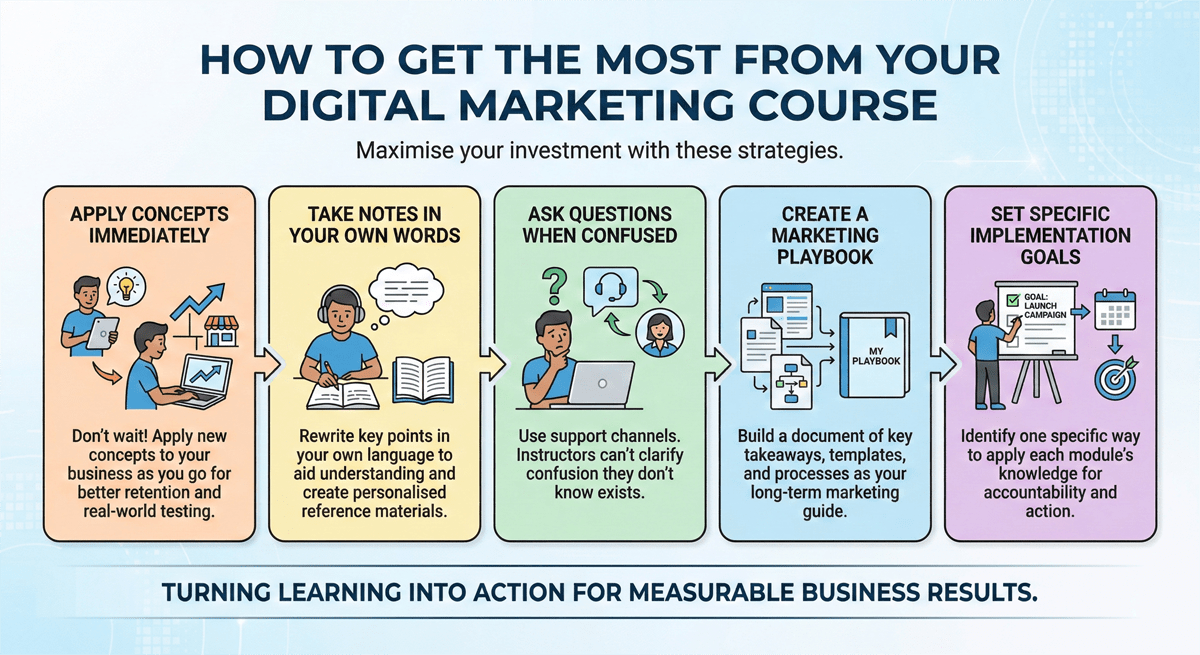
How to Get the Most from Your Digital Marketing Course
Once you've selected a course, maximise your investment with these strategies.
Apply Concepts Immediately
Don't wait until course completion to implement what you learn. Apply new concepts to your business as you go. This reinforcement helps retention and lets you see what works in your specific context.
Take Notes in Your Own Words
Rather than just highlighting or screenshotting, rewrite key points in language that makes sense to you. This process aids understanding and creates personalised reference materials.
Ask Questions When Confused
Don't struggle silently with concepts you don't understand. Use whatever support channels the course provides. Instructors can't clarify confusion they don't know exists.
Create a Marketing Playbook
As you learn, build a document that captures your key takeaways, templates, and processes. This becomes your marketing reference guide long after the course ends.
Set Specific Implementation Goals
At the start of each module, identify one specific way you'll apply that knowledge to your business. This goal-setting creates accountability and ensures learning translates to action.
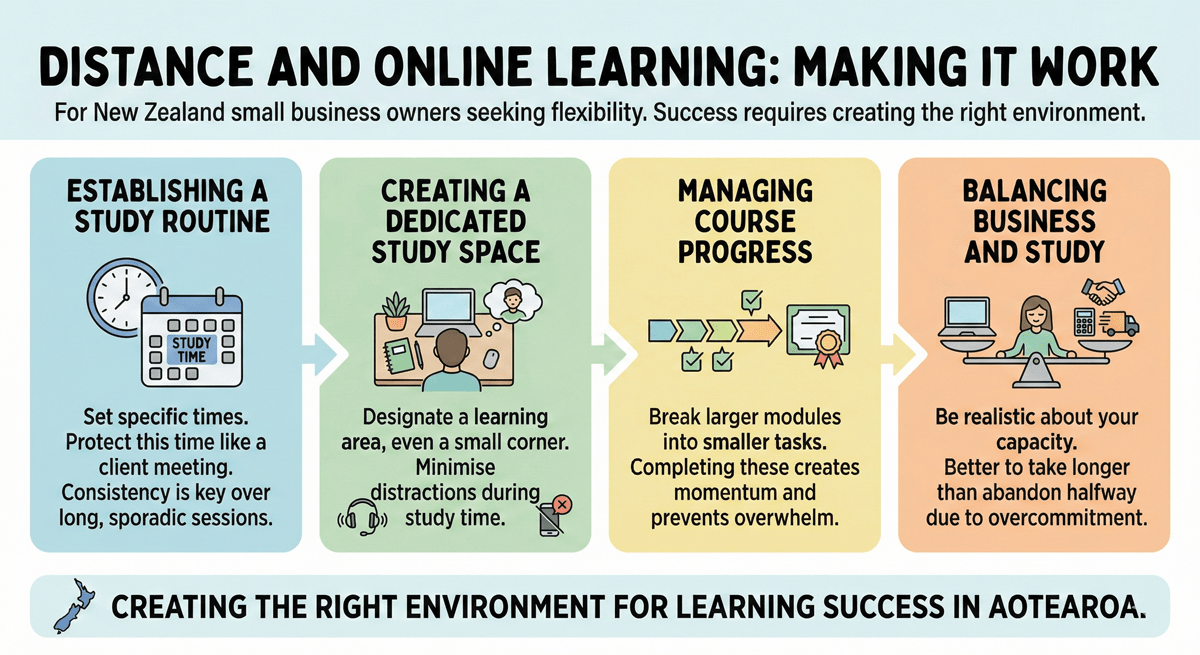
Distance and Online Learning: Making It Work
Many New Zealand small business owners choose distance and online learning courses for flexibility. Success requires creating the right environment.
Establishing a Study Routine
Set specific times for course work and protect that time like you would a client meeting. Consistency matters more than long sporadic sessions.
Creating a Dedicated Study Space
Even if it's just a corner of your dining table, having a designated learning area helps you focus. Minimise distractions during study time.
Managing Course Progress
Break larger modules into smaller tasks. Completing these creates momentum and prevents the overwhelm that comes from looking at everything you need to learn.
Balancing Business and Study
Be realistic about what you can manage. It's better to take slightly longer to complete a course than to abandon it halfway because you overcommitted.
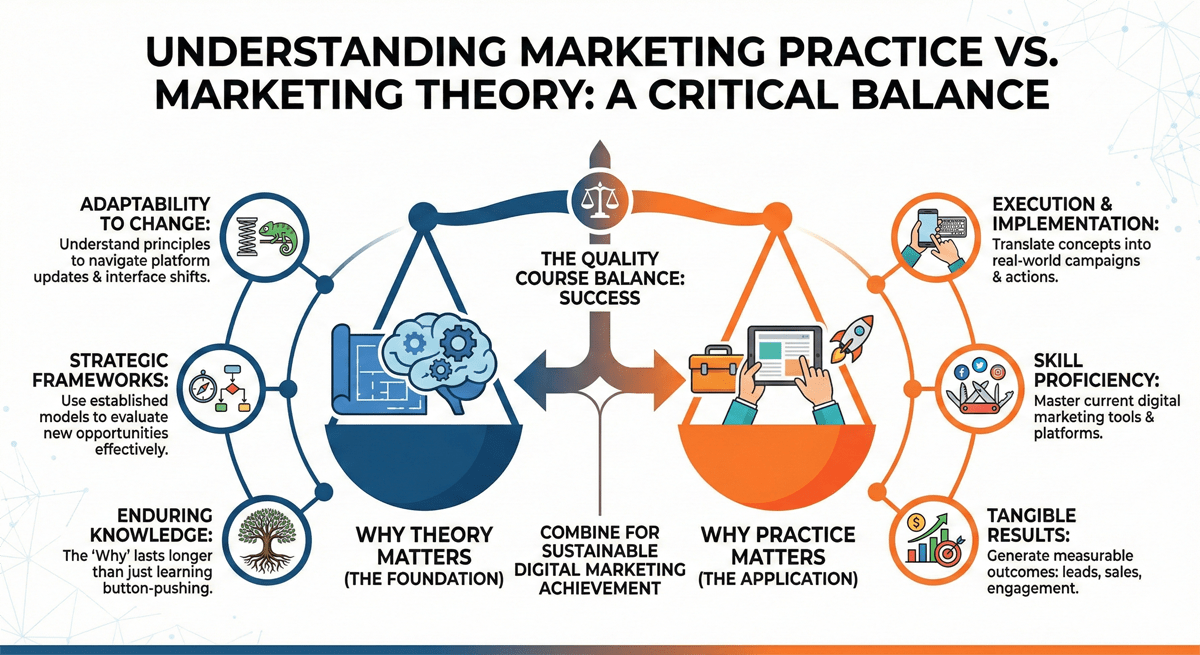
Understanding Marketing Practice vs. Marketing Theory
Quality courses balance conceptual understanding with practical application. You need both to succeed.
Why Theory Matters
Understanding the principles that underpin digital marketing helps you adapt when platforms change. If you only learn button-pushing, you're lost when the interface updates.
Good courses explain why certain strategies work, giving you frameworks to evaluate new opportunities as they emerge.
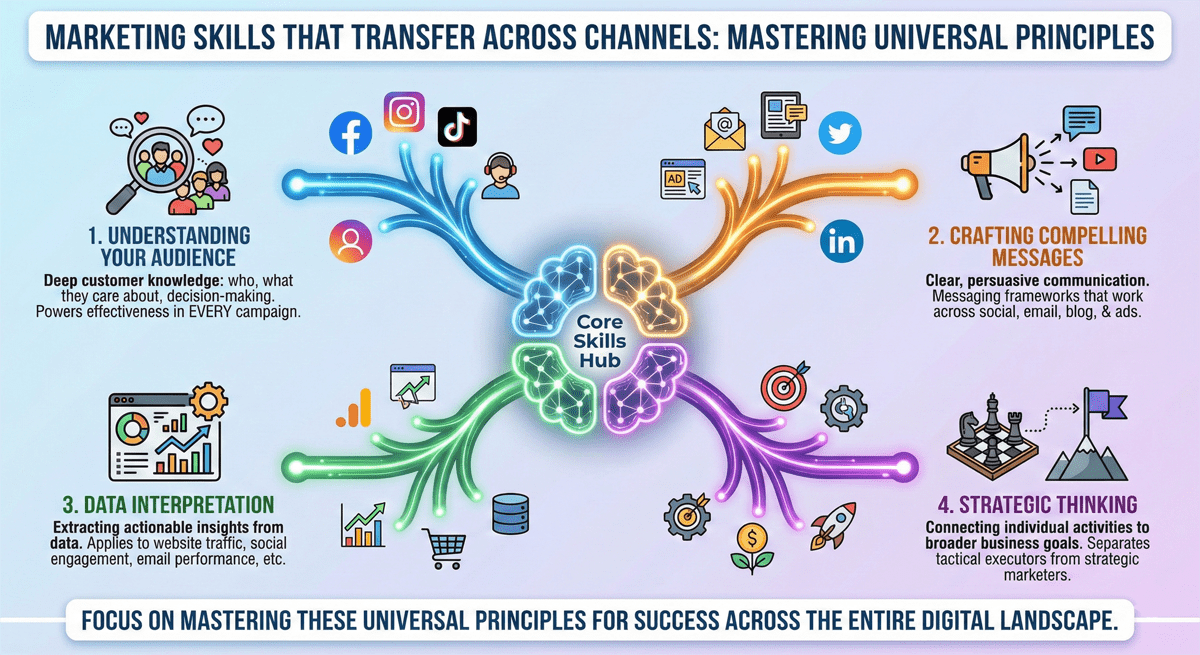
Marketing Skills That Transfer Across Channels
Whilst specific platforms differ, strong marketing skills transfer across digital channels. Focus on mastering these universal principles.
Understanding Your Audience
All effective marketing starts with deep customer understanding. The better you know who you're talking to, what they care about, and how they make decisions, the more effective every marketing campaign becomes.
Crafting Compelling Messages
Whether you're writing a social media post, email, blog article, or ad, the ability to communicate clearly and persuasively is fundamental. Good courses teach messaging frameworks that work across contexts.
Data Interpretation
Analytics tools vary, but the skill of looking at data and extracting actionable insights applies everywhere. You'll use this whether analysing website traffic, social media engagement, or email campaign performance.
Strategic Thinking
The ability to see how individual marketing activities connect into broader business goals separates tactical executors from strategic marketers. This thinking applies regardless of which digital channels you use.
The Digital Marketing Industry in New Zealand
Understanding the local digital marketing space helps contextualise your learning and career opportunities.
New Zealand's digital economy continues growing, with businesses of all sizes recognising they need strong online presence. This creates demand for people with digital marketing skills, whether working for themselves, in-house for companies, or for agencies.
The New Zealand digital marketing industry differs from larger markets in some ways. Our smaller population means campaigns often have different scale and budget considerations. Understanding these local nuances, which quality NZ-focused courses teach, matters for practical success.
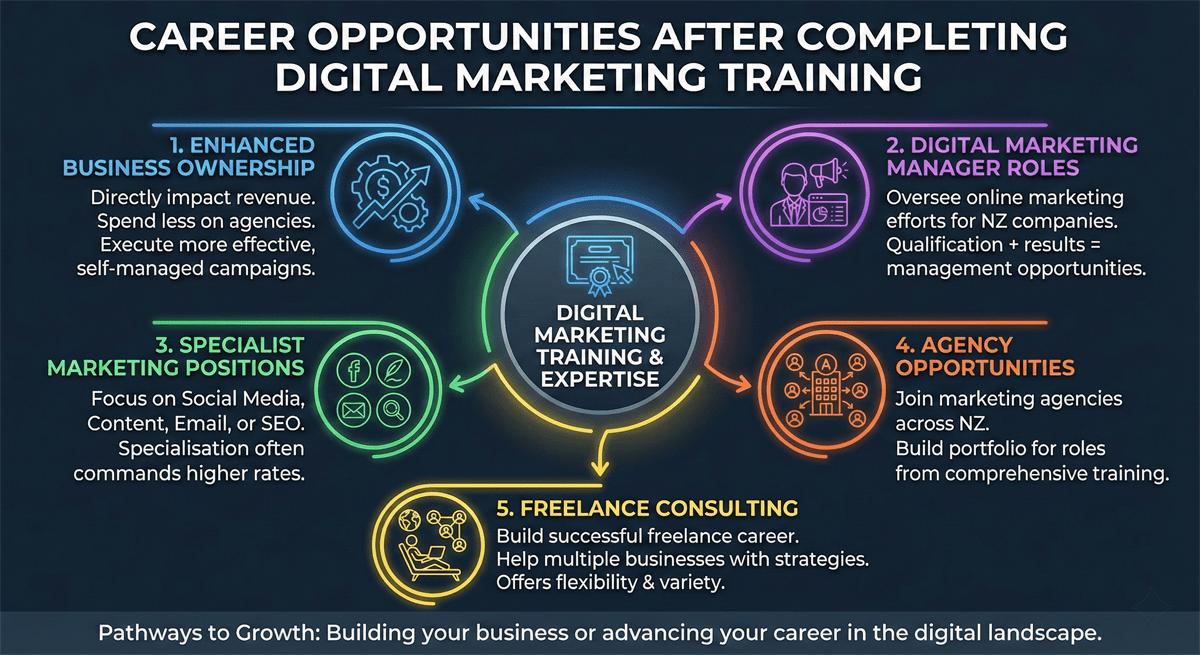
Career Opportunities After Completing Digital Marketing Training
Gaining expertise in digital marketing opens multiple pathways, whether you're building your own business or considering employment.
Enhanced Business Ownership
For small business owners, marketing skills directly impact revenue. You'll spend less on agencies whilst executing more effective campaigns yourself.
Digital Marketing Manager Roles
Many New Zealand companies need skilled digital marketing managers who can oversee online marketing efforts. A solid qualification combined with demonstrated results can open these doors.
Specialist Marketing Positions
You might focus on becoming a social media specialist, content marketing expert, email marketing professional, or SEO consultant. Specialisation often commands higher rates than generalist positions.
Agency Opportunities
Marketing agencies throughout New Zealand need skilled practitioners. Starting with a comprehensive digital marketing course and building a portfolio of work can lead to agency roles.
Freelance Consulting
Many digital marketing professionals build successful freelance careers, helping multiple businesses with their marketing strategies and execution. This path offers flexibility and variety.
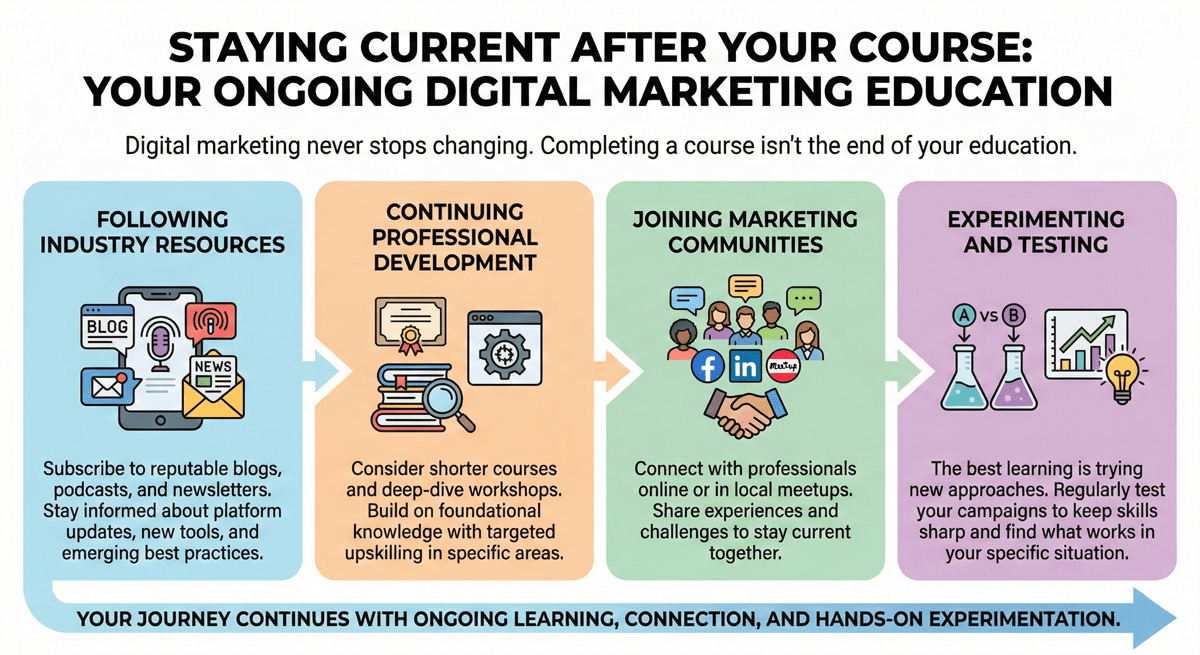
Staying Current After Your Course
Digital marketing never stops changing. Completing a course isn't the end of your education.
Following Industry Resources
Subscribe to reputable marketing blogs, podcasts, and newsletters. This keeps you informed about platform updates, new marketing tools, and emerging best practices.
Continuing Professional Development
Consider shorter courses or workshops that dive deep into specific areas as they become relevant. Build on your foundational knowledge with targeted upskilling.
Joining Marketing Communities
Connect with other marketing professionals through online communities or local meetups. Sharing experiences and challenges helps everyone stay current.
Experimenting and Testing
The best learning comes from trying new approaches with your own marketing campaigns. Regular testing keeps your skills sharp and reveals what works in your specific situation.
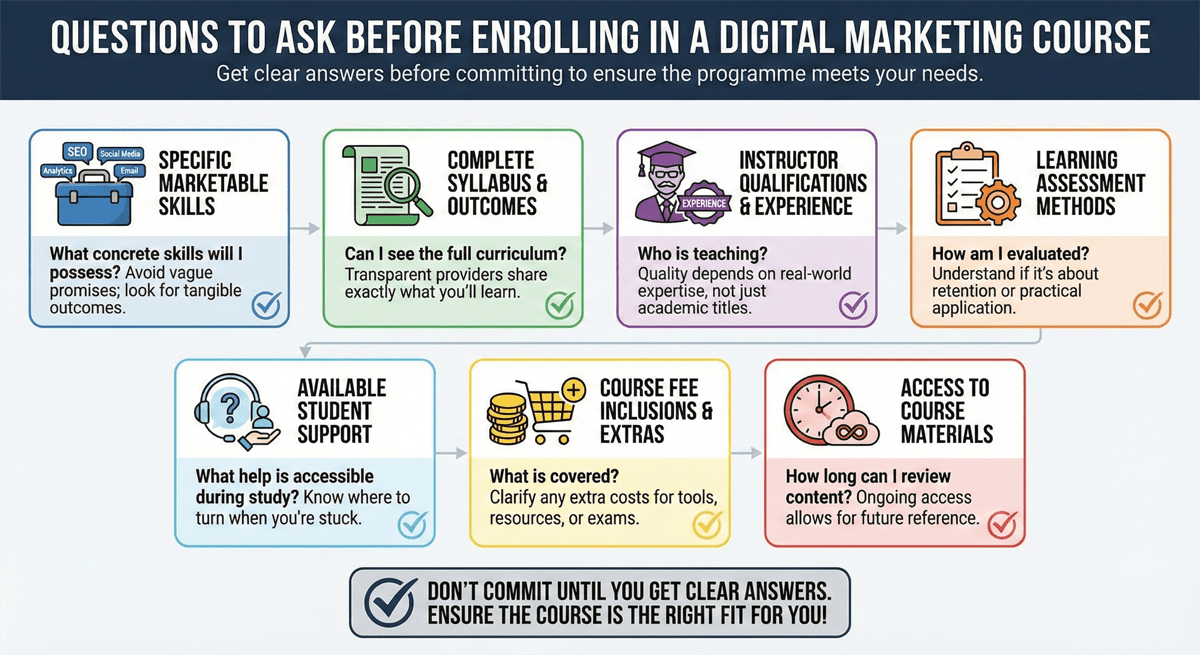
Questions to Ask Before Enrolling
Before committing to any digital marketing course, get clear answers to these questions:
What specific marketing skills will I have after completing this programme? Look for concrete answers, not vague promises about becoming a "marketing expert."
Can I see the complete course syllabus and learning outcomes? Transparent providers share exactly what you'll learn.
What qualifications or experience do the instructors have? Teaching quality depends heavily on instructor expertise.
How is my learning assessed? Understanding evaluation methods tells you whether the course focuses on retention or application.
What support is available whilst I'm studying? Know what help you can access when you need it.
What's included in the course fee? Clarify whether you're paying extra for tools, resources, or examinations.
How long do I have access to course materials? Ongoing access means you can review concepts whenever needed.
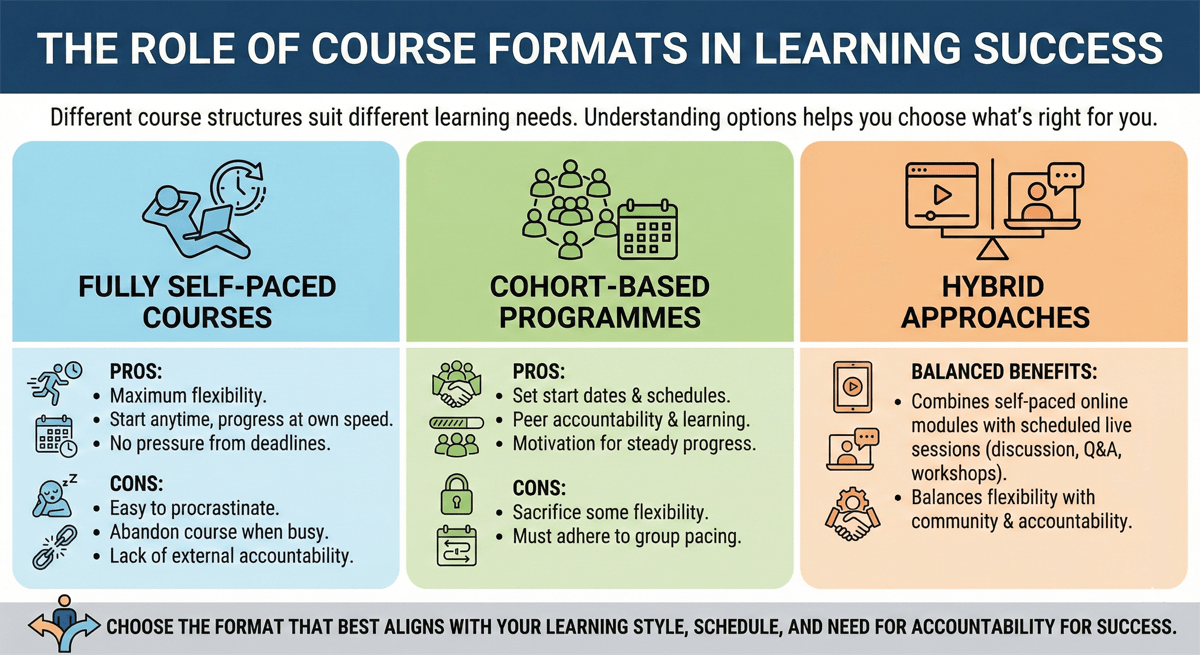
The Role of Course Formats in Learning Success
Different course structures suit different learning needs. Understanding options helps you choose what's right for you.
Fully Self-Paced Courses
These offer maximum flexibility. You start whenever you want and progress at your own speed. There's no pressure from cohort pacing or rigid deadlines.
The downside is that without external accountability, it's easy to procrastinate or abandon the course when business gets busy.
Cohort-Based Programmes
These courses have set start dates and progress schedules. You move through material with other students, creating peer accountability and learning opportunities.
The structure provides motivation and ensures steady progress, though you sacrifice some flexibility.
Hybrid Approaches
Some providers combine self-paced online modules with scheduled live sessions for discussion, Q&A, or practical workshops. This balances flexibility with community and accountability.
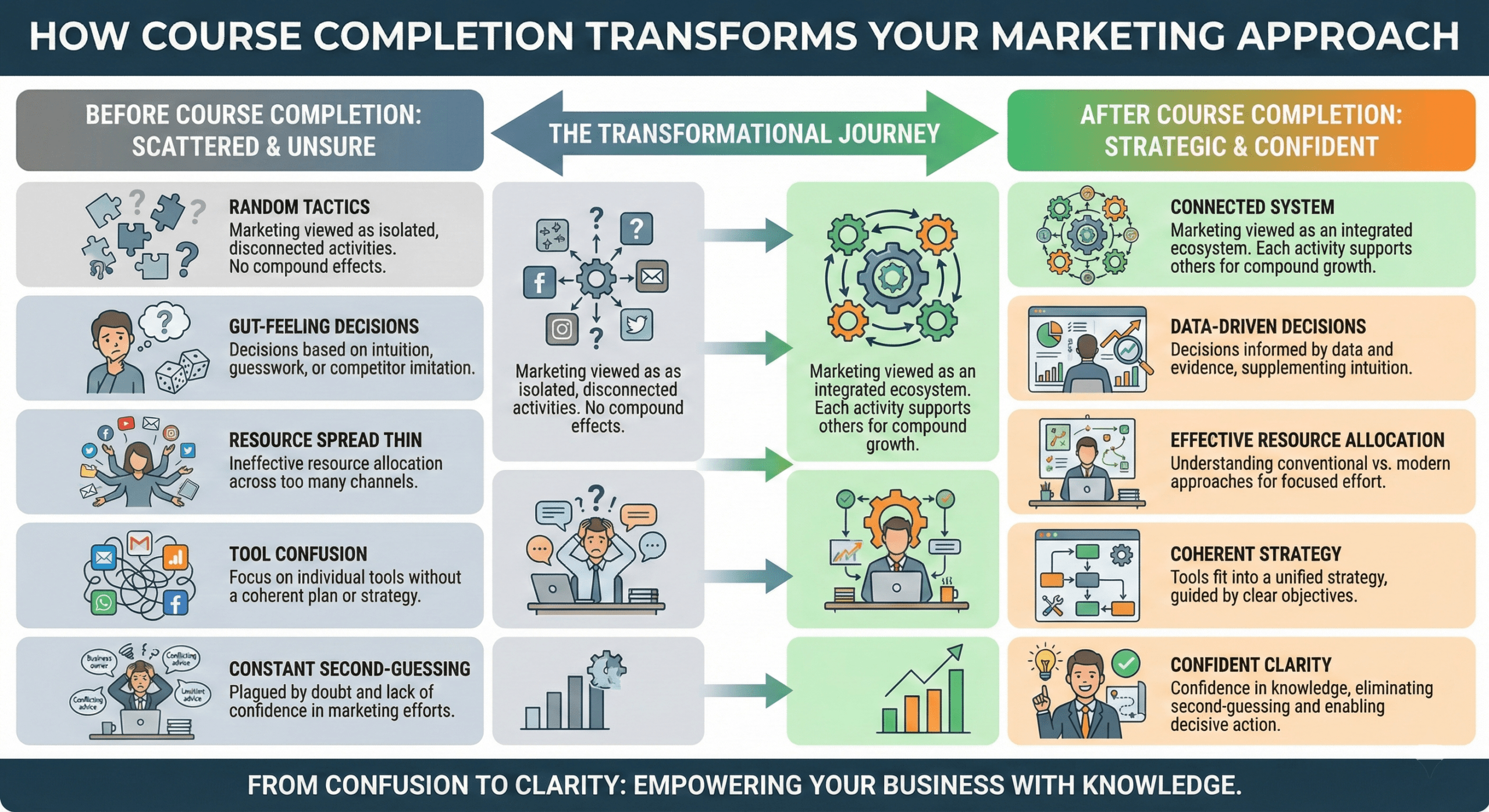
How Course Completion Transforms Your Marketing Approach
Finishing a comprehensive digital marketing course should fundamentally change how you think about business promotion.
You'll stop seeing marketing as a collection of random tactics and start viewing it as a connected system. Each marketing activity supports others, creating compound effects.
You'll make decisions based on data rather than gut feelings or copying what competitors do. This doesn't mean ignoring intuition, but supplementing it with evidence.
You'll understand conventional marketing approaches versus modern digital opportunities. This helps you allocate resources effectively rather than spreading yourself too thin across too many channels.
You'll recognise how various digital marketing tools fit together in a coherent marketing plan. Individual tools become less important than the strategy guiding their use.
Most importantly, you'll have confidence that you know what you're doing. This clarity eliminates the constant second-guessing that plagues many small business owners when marketing their companies.
FAQ
How long does it take to complete a digital marketing course in New Zealand?
Course duration varies significantly based on qualification level and format. Certificate programmes typically take 2-4 months of part-time study, whilst diploma qualifications usually require 6-12 months. Intensive short courses might condense essentials into just a few weeks, whilst self-paced online programmes let you control the timeline completely. Your available study time matters more than nominal course length—someone dedicating 10 hours weekly will progress faster than someone managing just 3 hours. Most providers give you flexibility to extend completion time if needed, though cohort-based programmes have more rigid schedules.
Can I learn digital marketing effectively through online courses, or do I need classroom training?
Online learning works extremely well for digital marketing because you're learning in the same environment where you'll apply your skills. Many successful marketing professionals have built their expertise entirely through online programmes. The key factors for online learning success are self-discipline, active application of concepts to your business, and choosing courses with strong support systems. Classroom training offers more structured accountability and immediate interaction with instructors, which some people prefer. However, the flexibility and cost-effectiveness of online formats make them the better choice for most small business owners. Hybrid approaches combining online study with occasional workshops provide middle ground.
Do I need any prior experience or qualifications before starting a digital marketing course?
Most foundational digital marketing courses, including certificates and entry-level diplomas, require no prior marketing experience or formal qualifications. They're designed for beginners and assume you're starting from scratch. You should be comfortable using computers and basic internet tools, but you don't need technical expertise. If you're already running a business, you likely have more relevant experience than you realise—you understand your customers, you've communicated about your products, and you've probably already done some informal marketing. Advanced specialist courses might require completion of foundational training first or demonstrated practical experience. Check prerequisites for any specific programme you're considering, but don't let lack of formal experience stop you from starting.
How much should I expect to pay for a quality digital marketing course in New Zealand?
Quality digital marketing training in New Zealand typically ranges from $500-$8,000 depending on qualification type and provider. Short certificate courses from reputable providers generally cost $500-$3,000, whilst comprehensive diploma programmes range from $3,000-$8,000. Self-paced online courses usually cost less than cohort-based programmes with live instruction. Be cautious of very cheap courses under $300—these often provide outdated content or minimal support. Conversely, expensive doesn't automatically mean better; evaluate based on content quality, instructor expertise, and practical application opportunities, not just price. Consider the investment relative to potential business impact. If improved marketing skills help you generate even a few additional customers monthly, courses pay for themselves quickly.
Will a digital marketing course help if I'm specifically running a small business in New Zealand?
Absolutely. Digital marketing courses designed for the New Zealand market address local audience behaviours, popular platforms among Kiwis, and budget-appropriate strategies for smaller businesses. You'll learn how to compete effectively without massive budgets, which tactics deliver best results for NZ audiences, and how to establish strong local presence. Most importantly, you'll stop wasting money on ineffective marketing approaches and make informed decisions about where to invest limited time and resources. Many small business owners find that implementing even a few concepts from quality courses generates more customers than their previous trial-and-error approach. Look for courses that include local case studies and address the specific challenges of marketing in New Zealand's smaller market.
Q: Is the course content relevant to the New Zealand market?
If you choose a New Zealand specialised provider like Netmarketing Courses, yes. They focus on the digital landscape here and use examples from the local digital marketing industry. This is better than taking a generic global course that might not understand Kiwi online consumer behaviour.
Conclusion
Choosing the right digital marketing course for your New Zealand small business comes down to matching your specific needs, learning style, and goals with quality training that delivers practical, applicable skills.
Don't get paralysed trying to find the "perfect" course. Focus on finding one that covers fundamentals comprehensively, offers flexibility that fits your schedule, comes from instructors with real marketing experience, and emphasises practical application over pure theory.
The digital marketing skills you'll gain—from social media strategies to email campaigns to analytics interpretation—will serve your business for years. The investment in quality training pays dividends through more effective marketing campaigns, better customer engagement, and ultimately, business growth.
Start by clarifying what you most need to learn, then evaluate options against that priority. The right course is out there, and the sooner you start building your marketing expertise, the sooner you'll see results in your business.
--
PS We hope you'll consider the Netmarketing Courses range of online training options. We divide our courses into three key categories:
1 AI-Focussed Courses

Unlock the power to revolutionize your strategies, elevate content creation, and decode consumer insights like never before. Whether you’re aiming to amplify engagement, boost conversions, or innovate with unparalleled personalization, this course is your pathway to becoming an AI-savvy marketer.
Check out the details of our AI for Marketers online training course here.
--
The Advanced AI for Marketers course is an eleven-week, browser-based program designed for experienced New Zealand marketing professionals, digital leads, and brand managers who want to transition from casual AI users to strategic "orchestrators" of autonomous systems.
Check out the details of our Advanced AI for Marketers online training course here.
--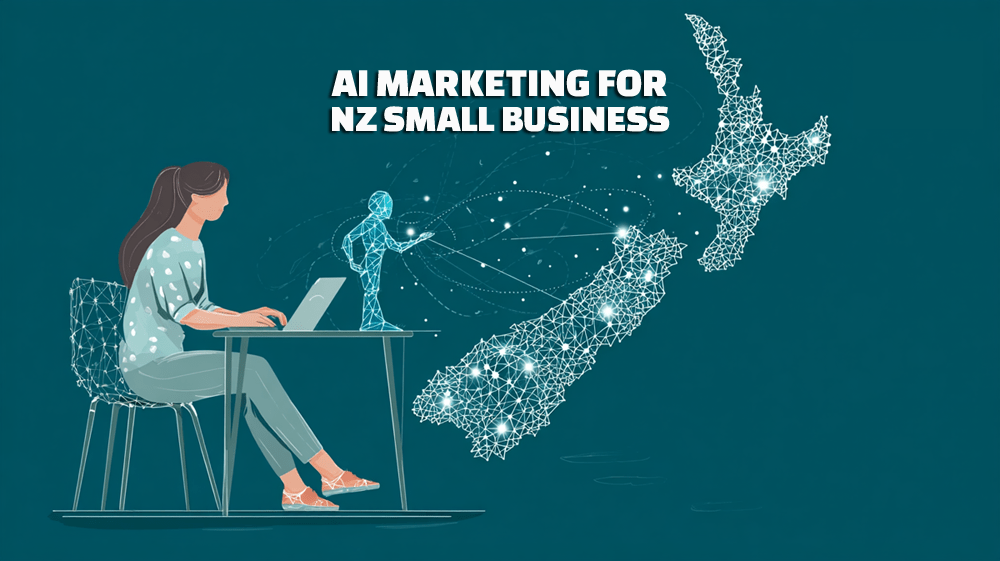
For Kiwi small business owners and solo operators, AI offers a massive opportunity to compete with larger rivals by saving time and cutting costs. This nine-lesson course cuts through the technical jargon to show you exactly how to use AI tools for practical tasks—like drafting social media posts, responding to customer queries 24/7 with chatbots, and analysing your sales data. We also cover the essential "Kiwi" context, ensuring you know how to use these tools safely and legally within New Zealand's privacy regulations.
Read the full details of the AI Marketing for NZ Small Business course here.
--
- Master AI as Your Strategic Advantage
- Become the Strategic Generalist Your Team Needs
- Prove Your Marketing Impact with Confidence
- Lead Through Influence, Regardless of Your Title
Read all about the Vital AI Marketing Skills 2026 course by clicking here.
--
Designed for advertising professionals across the board—whether you're agency-side, in-house, or freelancing—this ten-part course cuts through the hype to deliver practical, hands-on training. We demystify the technology and show you exactly how to apply AI to your daily workflow, from prompt engineering and content creation to design, video, and media buying.
Check out the details of our AI for Advertising Professionals course here.
--

Specifically tailored for the New Zealand retail environment, this 12-lesson masterclass helps you work smarter, not harder. You'll learn to use AI as your strategic co-pilot to automate repetitive tasks and generate fresh marketing ideas. Each lesson comes with a unique, customised AI tool to help you streamline everything from customer profiling and strategy to content creation and email marketing.
Read all about the AI-Enhanced NZ Retail Marketing Masterclass by clicking here.
--
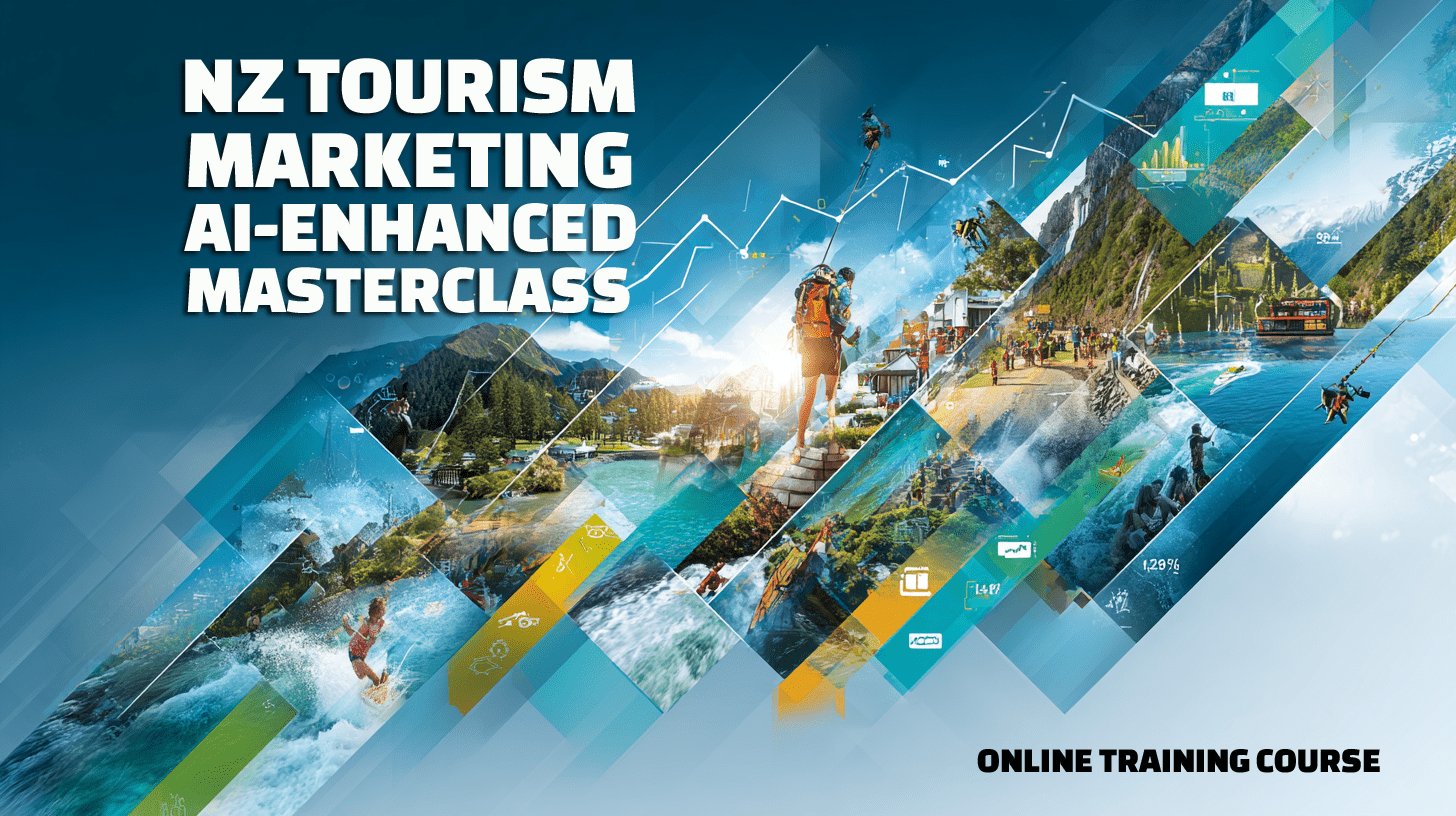 In 2026, AI is essential for staying competitive in tourism. This masterclass is designed to help Kiwi tourism operators free themselves from time-consuming administrative tasks and focus on what matters most: delighting guests. Over 12 comprehensive lessons, you'll gain access to custom AI tools that assist with storytelling, responding to reviews, planning strategy, and creating "scroll-stopping" social content.
Find out more about the NZ Tourism Marketing – AI-Enhanced Masterclass here.
--
2 Social Media Marketing Courses
Elevate your social media game to new heights with our 13-part “Social Media Marketing Course,” specially tailored for New Zealand businesses relatively new to Social Media. This course offers a deep dive into the world of social media, equipping you with the strategies and tools necessary to create engaging content, foster a thriving community, and drive meaningful engagement across platforms. Whether you’re a small business owner looking to expand your reach, a marketer aiming to refine your social media strategy, or a content creator seeking to increase your impact, our “Social Media Marketing Course” is designed to propel your social media efforts to the forefront of excellence.
For more details of the Social Media Marketing online course,please click here.
—
 Moving beyond platform basics, this advanced course addresses the complex, real-world challenges of modern digital marketing, from proving ROI in a post-cookie world to leveraging AI for competitive advantage. Students will learn the specialized skills required to manage the "Social Stack"—the collection of distinct disciplines including performance marketing, social commerce, community architecture, and data analysis—transforming their social media function from a cost center into a primary driver of business growth.
For more details of the Advanced Social Media Marketing online course, please click here.
--
In recognition of the combined strengths of Facebook and Instagram, we’ve taken the best of our popular Facebook and Instagram courses, and blended them together into a powerful thirteen-part Complete Facebook and Instagram Marketing online training course.
This combined course will bring you up to speed with what’s required to make your social media marketing on Facebook and Instagram really work for you.
—
If your target market is Kiwis Under 35 (or even just “young at heart”),you should consider TikTok marketing. TikTok has exploded in popularity over the past few years, especially among younger audiences (thanks in part to Covid and the need for home-grown entertainment.
Check out the details of our TikTok Marketing online training course by clicking here.
3 Other Digital Marketing Courses
Check out the details of our NZ Digital Marketing Essentials 2026 online training course here.
—
As the digital landscape continues to evolve, staying competitive means not just keeping up, but staying ahead. That’s where this course comes in. Whether you’re aiming to boost your career, elevate your business, or simply stay relevant in an ever-changing field, our “Certificate in Digital Marketing” provides a solid foundation and advanced insights tailored to the New Zealand market. Equip yourself with cutting-edge skills, earn a certification that speaks volumes, and open doors to new opportunities in the digital marketing sphere. Begin your journey to becoming a digital marketing expert today.
For more details of the Certificate in Digital Marketing online course, please click here.
—

Dive into the digital realm with our “Digital Marketing 101” course, designed specifically for New Zealand marketers who are ready to harness the power of digital channels to skyrocket their marketing efforts. This course lays down the fundamentals of digital marketing in a concise, clear, and actionable manner. From understanding the digital marketing landscape to mastering the art of SEO, social media, email marketing, and analytics, we’ve got you covered. It’s the perfect starting point for beginners and a great refresher for seasoned professionals looking to update their knowledge with the latest trends and strategies.
For more information about Digital Marketing 101, please click here.
--
Our B2B Thought Leadership course combines proven thought‑leadership principles with a suite of AI‑powered tools that make it practical to research your entire buying committee, craft high‑value hero content and repurpose it into stakeholder‑specific assets. You’ll learn how to map the pain points of CEOs, CFOs, CMOs, technical leaders and end users; build persuasive content pillars that appeal to each; and track the ROI of your efforts with clear, revenue‑focused metrics.
Check out the details of our B2B Thought Leadership course here.
--
This course has been specifically crafted for Kiwi business owners who want real, practical results – not just marketing theory.
As a small business owner in New Zealand, you face unique challenges: a smaller market, tight budgets, limited time, and the constant pressure of competing with both local and international players. The good news? Your size and local presence can be your greatest advantage – if you know how to leverage them effectively.
This comprehensive course cuts through the overwhelming world of digital marketing to deliver exactly what you need to know, tailored specifically for the New Zealand market. You’ll learn practical, proven strategies that work for businesses your size, in your market.
Check out the details of our Practical Digital Marketing for NZ Small Business course here.
---
Our NZ Public Sector Digital Marketing & Communications 2026 online training course cuts through the noise to give you strategic, future-focused training specific to your needs. In this comprehensive online course, you’ll learn how to navigate compliance, streamline approvals, and deploy cutting-edge digital tactics that resonate with citizens and stakeholders alike.
--
Our "Digital Marketing Essentials for Local Government 2026" course is designed to equip NZ local government communications teams and marketing professionals with the knowledge and skills required to stay relevant in an ever-changing digital landscape. The course maintains the core digital marketing principles while incorporating council-specific considerations, compliance requirements, and public sector best practices.
Check out the details of our Digital Marketing Essentials for Local Government 2026 course here
--
Our online course, ECOMMERCE MARKETING, tells you what you need to know in a ten-part programme that steps you through the principles and practices of marketing your New Zealand ecommerce store.
For more information about the eCommerce Marketing course, please click here.
---

For more information about our Writing for the Web course, please click here.
—

Step into the spotlight with our “Online Video Marketing Course,” tailored specifically for New Zealand marketers who want to leverage the power of video in their digital strategies. This immersive course covers everything from conceptualizing captivating video content to production essentials and distribution strategies that maximize reach and engagement, including the latest developments in AI that can enhance your creativity and reduce the time and resources required
For more details of the Online Video Marketing course, please click here.